RSI is a Great Training Option for Everyone
Learn more about how we can prepare you to advance your career.
Most people only notice whether a space feels comfortable or uncomfortable. Students training in HVAC learn to notice why. At The Refrigeration School, Inc. (RSI), HVAC students develop the ability to recognize early signs of system issues, often before those issues lead to breakdowns, safety concerns, or costly repairs.
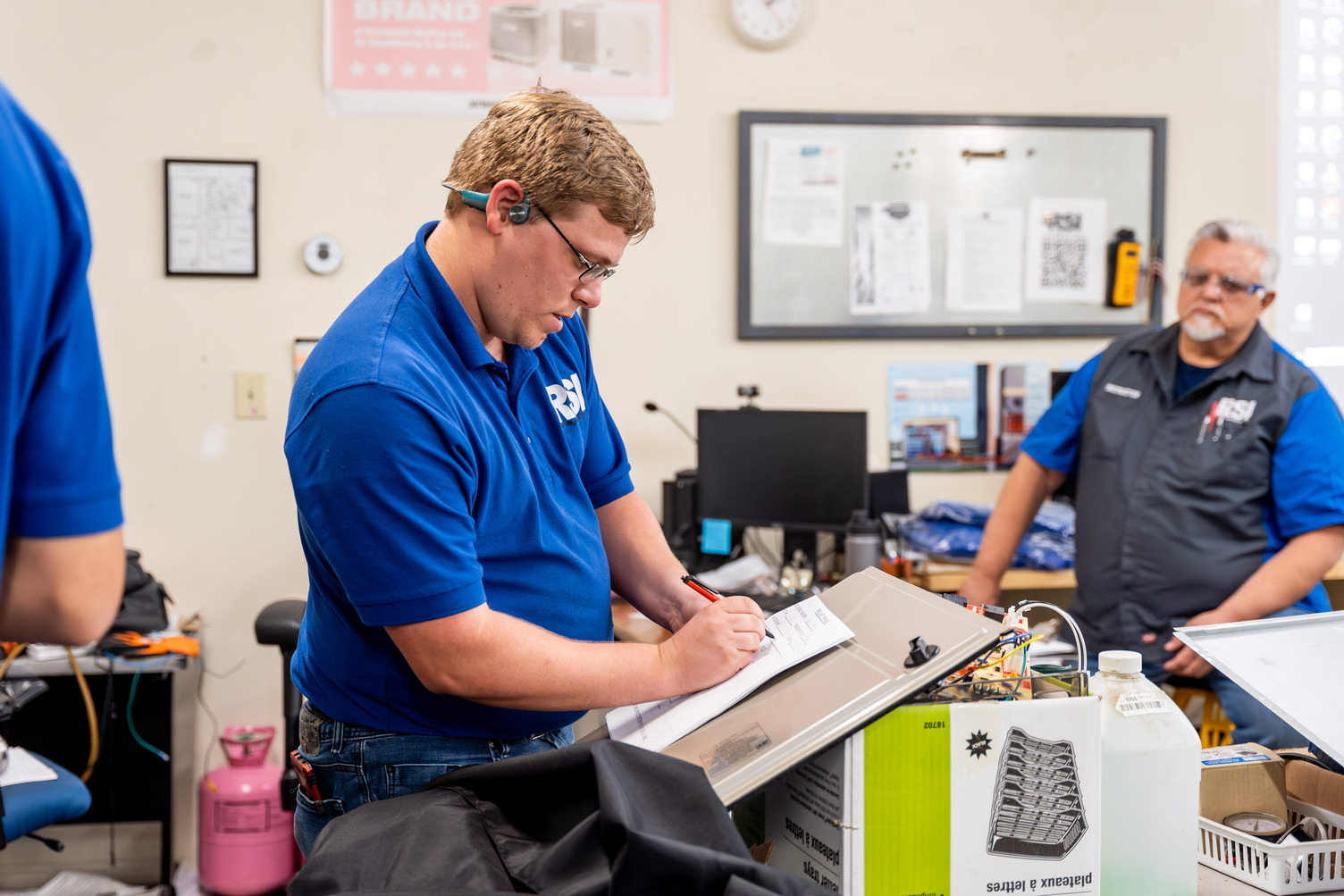
Through hands-on HVAC training, students begin to observe how airflow, temperature changes, system sounds, and performance patterns connect. These skills are not typically taught as isolated concepts or measured only through written exams. Instead, they develop over time as students work directly with equipment and encounter a wide range of operating conditions. Training programs can help accelerate this learning process by exposing students to multiple systems and common problem scenarios in a structured environment.
These observational skills greatly assist HVAC troubleshooting, which often depends on identifying system behavior and symptoms rather than single, obvious failures. Over time, students learn to interpret what a system is doing and what it is not doing as a whole.
This ability to see beyond surface-level comfort is one of the clearest differences between someone who simply adjusts a thermostat and a trained HVAC technician who understands how an entire system operates.
Unusual HVAC System Sounds
HVAC systems regularly make noise, but certain sounds can indicate trouble.
Get Started on the Path to a New Career
Fill out our form to learn how we can help you change your life.
- Rattling may suggest loose panels, fasteners, or worn internal components.
- Buzzing or humming can point to electrical problems, motor strain, or developing performance issues.
- Clicking may indicate control or relay concerns.
- Frequent on-and-off cycling often signals airflow restrictions, thermostat problems, or system imbalance.
Many common HVAC problems can initially be identified through noticeable changes in sound, which can indicate underlying mechanical, airflow, or performance issues. Most people ignore these sounds or assume they are normal.
Temperature Inconsistencies
Uneven temperatures are one of the most common signs of HVAC problems. One room may feel too warm while another stays cold, even when the thermostat is set correctly. In some cases, a system may struggle to reach the desired temperature at all.
Temperature imbalances are often linked to airflow issues, duct problems, or system inefficiencies rather than simple thermostat settings. These issues can significantly affect comfort and overall system performance in a building.
HVAC students learn to measure and evaluate temperature differences rather than rely on guesswork. Over time, repeated exposure helps them recognize when temperature patterns point to deeper system issues rather than simple adjustments.
Poor or Imbalanced Airflow
Airflow problems often appear as weak air coming from vents, noisy ductwork, or rooms that never seem to get enough heating or cooling. Air may feel strong in one area of a building and noticeably weaker in another.
Balanced airflow is needed l for maintaining comfort, efficiency, and overall HVAC system performance. Poor airflow can also affect indoor air quality, which depends in part on effective ventilation and properly functioning HVAC systems.
Through repeated exposure to working systems, HVAC students learn how air should move through a space and how restricted or imbalanced airflow affects comfort, efficiency, and system reliability.
Visible Signs of System Problems
Many HVAC issues leave visible clues. Ice buildup on coils, water pooling near equipment, oil stains, corrosion, or damaged wiring can all indicate underlying problems.
Changes in system condition or visible wear can signal maintenance or performance concerns that may affect efficiency and reliability if left unaddressed.
HVAC students learn to pay attention to these details during routine inspections and hands-on activities. With experience, they begin to recognize which visual signs are minor and which suggest more serious concerns, helping prevent system failures and support safer operation.
Changes in System Performance Over Time
Not all HVAC problems appear suddenly. Many systems show gradual signs of decline, such as longer run times, reduced efficiency, rising energy use, or more frequent service calls. A system may still operate while slowly moving toward failure.
Gradual changes in system performance and efficiency are often indicators of developing issues related to design, operation, or maintenance.
HVAC students learn to notice how systems behave over time rather than judging performance based on a single moment. As patterns emerge, they develop a better sense of when a system is aging normally and when performance changes suggest a problem that should be addressed.
How HVAC Training Builds Observational Skills for the Job
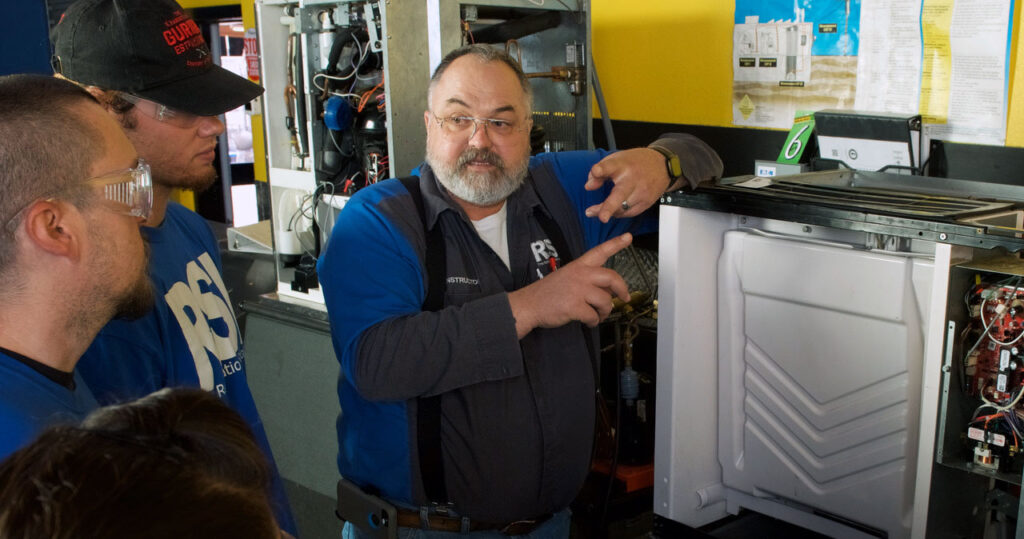
Observational skills are not usually taught as separate lessons. They develop through structured HVAC training and repeated hands-on work. At RSI, students learn how HVAC systems are supposed to operate in the classroom, then apply that knowledge in labs using real equipment in different conditions.
Repeated exposure matters. As students work with multiple systems, setups, and operating states, they begin to develop habits that support accurate diagnosis, such as:
- Comparing system behavior across different operating conditions
- Noticing small changes over time instead of isolated moments
- Connecting classroom concepts to real equipment performance
- Building confidence through repeated hands-on practice
With time and practice, students rely less on step-by-step instructions and more on observation and experience. This background helps them approach unfamiliar systems with a clearer process for diagnosis.
These skills matter in HVAC careers. Employers value technicians who can identify problems accurately and avoid unnecessary part replacements. Customers benefit from clear explanations and early identification of issues. As HVAC systems continue to balance comfort, ventilation, and efficiency, technicians who understand system behavior are better prepared to work in real-world environments.
Training Your Eye for a Career in HVAC
Learning to notice what others overlook comes from experience, repetition, and hands-on exposure to real systems. HVAC students develop these abilities gradually as they work with equipment and encounter a wide range of operating conditions.
For students considering a practical, hands-on career, HVAC offers the opportunity to build skills that apply directly to real-world systems used in homes and businesses every day. With strong demand for technicians who can diagnose and maintain increasingly complex HVAC systems, training that emphasizes exposure, observation, and problem-solving can support long-term career growth in the skilled trades.
If you’re interested in learning more about HVAC training and how hands-on experience can help prepare you for real-world work, request more information to explore your next steps.